The Swiss real estate market offers stability and security, but also compressed returns due to high prices and a low interest rate environment. To seek better performance, more and more investors are looking abroad, where certain emerging markets combine tourism growth, more accessible acquisition costs, and appreciation potential.
Why Eco-Luxury
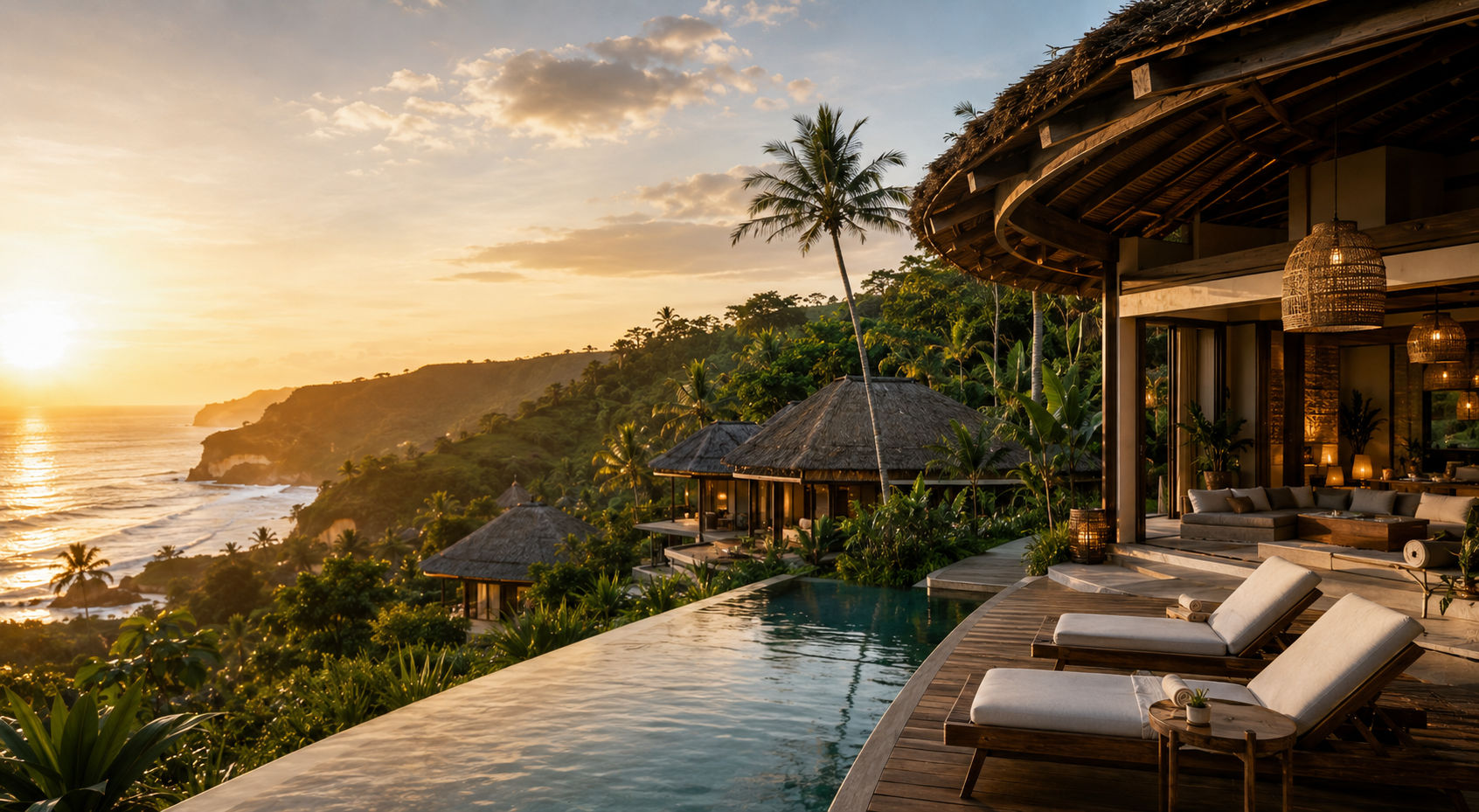
The eco-luxury hospitality and residence segment — lodges, wellness retreats, boutique resorts, high-end glamping — responds to a fundamental trend: an international clientele willing to pay a premium for premium, sustainable experiences located in exceptional natural environments. This structural demand supports both operating income and the value of the underlying assets.
Destinations like Sumba in Indonesia or the Marrakech region in Morocco illustrate this positioning. Land still affordable compared to Western standards, increasing tourist traffic, and scarcity of high-end supply: the combination creates a yield and capital gain potential no longer found in mature markets.
Drivers of Return
A well-positioned eco-luxury asset generates value through three channels. First, operating cash flow, driven by high occupancy rates and average rates. Then land appreciation, in areas where tourism pressure pushes prices up. Finally, currency effects, which can amplify — or erode — performance depending on local currency movements against the Swiss franc or euro.
In terms of metrics, these projects are evaluated as full-fledged investment assets: internal rate of return (IRR) over the holding period, multiple on invested capital (MOIC), annual net cash flow, and exit strategy. A savvy investor does not think only in terms of "price per square meter," but in value creation logic and resale scenarios.
Risks Not to Underestimate
Investing abroad introduces risks absent from the domestic market. Currency risk can turn a good local return into mediocre performance once repatriated. Legal frameworks and foreign ownership rules vary greatly from country to country and require rigorous local support. Liquidity is generally lower: reselling a specialized asset in an emerging market takes time. Added to this are political, regulatory, and operational risks specific to each destination.
These risks do not disqualify international investment — they set its price. The higher expected return is precisely the compensation for these uncertainties. The key is to identify them, structure them, and not expose a disproportionate share of one’s portfolio to them.
A Diversification Brick, Not a Foundation
International eco-luxury real estate is meant to complement a portfolio, not to form its base. For an investor whose foundation consists of stable Swiss or European assets, a measured allocation to this type of project provides a decoupled return driver and higher capital gain potential — at the cost of higher volatility and illiquidity.
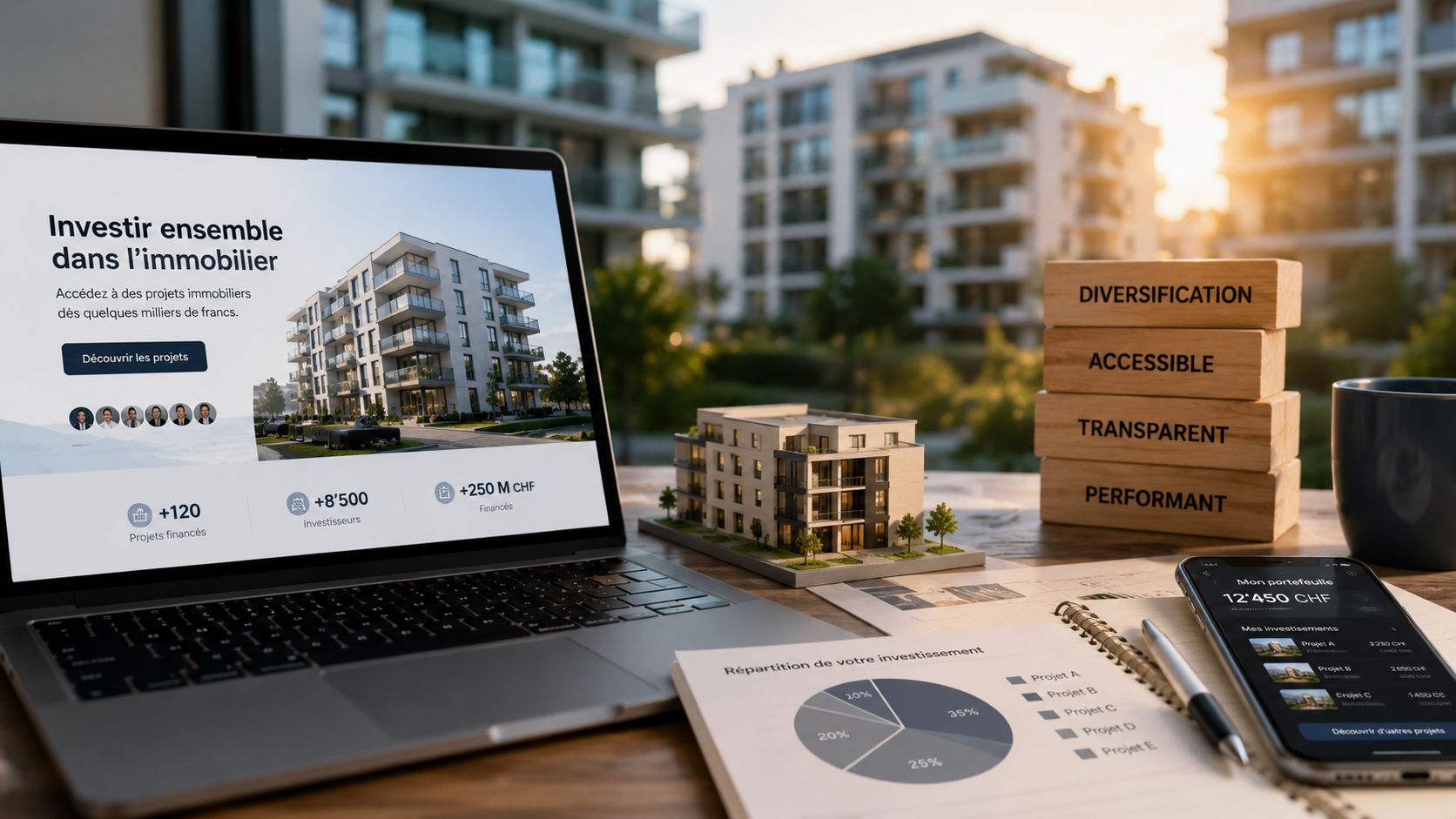
Moreover, crowdfunding facilitates access to this asset class: it allows taking a position in an international project with a controlled ticket size, whereas direct acquisition of an eco-luxury asset would require considerable capital and sharp local expertise.
Abroad is neither a promised land nor a trap: it is a diversification opportunity that rewards rigorous analysis and punishes improvisation.